Can You Get Cervical Cancer After The Menopause - How Can I Reduce My Risk Of Cervical Cancer? | BlackDoctor - Because many of the symptoms and problems of menopause are linked to low levels of estrogen, this hormone has often been used in the past to treat menopause.
Dapatkan link
Facebook
X
Pinterest
Email
Aplikasi Lainnya
Can You Get Cervical Cancer After The Menopause - How Can I Reduce My Risk Of Cervical Cancer? | BlackDoctor - Because many of the symptoms and problems of menopause are linked to low levels of estrogen, this hormone has often been used in the past to treat menopause.. Although regular visits to the physician can play a large part in identifying cervical cancer after menopause, it is also important for women to be aware of symptoms as this can indicate that medical attention is required. Abnormal bleeding during or after sexual intercourse, or between periods post menopausal bleeding, if you are not on hrt or have stopped it for six weeks Cancer of the cervix or vagina. There are several steps you can take to help prevent uterine cancer following menopause: While it may be just a sign of menopause, older women should be aware that irregular periods may also be a sign of cervical cancer, which makes it easy to confuse the symptoms.
Abnormal vaginal bleeding can be a sign of cancer, especially if it occurs years after a hysterectomy or during menopause. One of the strongest risk factors linked to uterine cancer is obesity. Three months after giving birth, she was diagnosed with cervical cancer. Ovarian cysts are more common before menopause than after, but as long as you have ovaries, you can develop an ovarian cyst. As a woman becomes older and her supply of eggs diminishes, she eventually enters menopause, when her body undergoes a number of changes.
Cervical Cancer Screening Test at $79 | Order Online & Get ... from www.dxsaver.com Exercise, eat a healthy diet, don't smoke and avoid secondhand smoke, and maintain a healthy body weight. Cancer of the uterus, including endometrial cancer and uterine sarcoma. Two main factors are linked with increased cancer risk after menopause: You have abnormal bleeding, bleeding after intercourse, vaginal discharge, or any other symptoms of cervical cancer. Other problems that start after menopause, like dryness and thinning of vaginal tissues and bone thinning, tend to get worse over time. Some of the docs questioned whether the pregnancy may have actually sped up the cancer, but they can't be sure. Here are a few things you can do: Because many of the symptoms and problems of menopause are linked to low levels of estrogen, this hormone has often been used in the past to treat menopause.
Learn about symptoms, risk factors, diagnosis, and treatment.
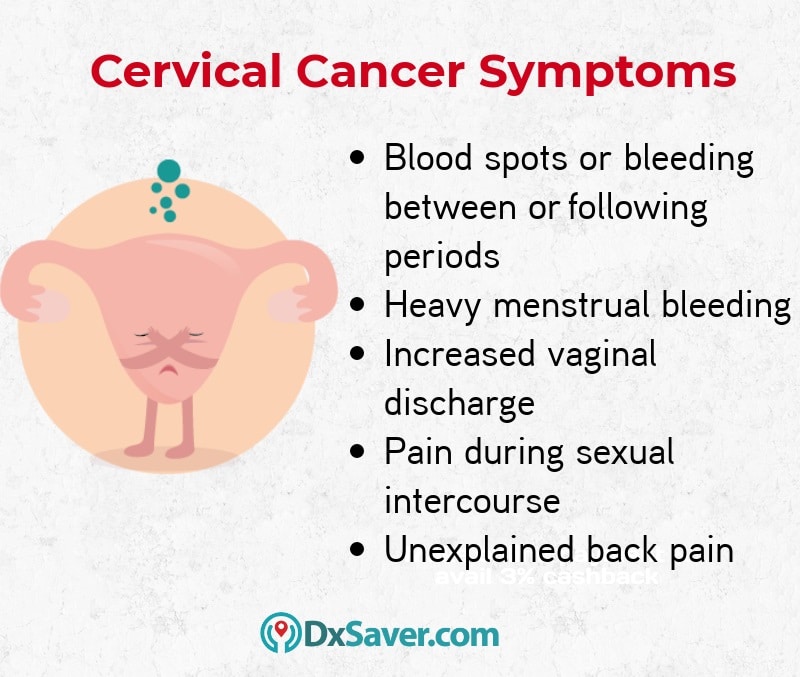
Research shows that gaining weight after menopause increases a woman's risk of breast cancer, but losing weight after menopause can actually reduce your risk. For example, abnormal menstrual bleeding, such as bleeding or spotting after menopause or between periods, can be a symptom of uterine cancer. Cancer of the cervix or vagina. That is why most women in menopause do not seek help when they experience these symptoms. Only young people get cervical cancer: Cervical cancer does not always have symptoms, especially if it is early stage. Invasive cervical cancer usually causes irregular bleeding after sex, in between periods, or after menopause. The bleeding or discharge women can experience often is dismissed as spotting, which is a common occurrence for some women in between menstrual cycles. Increased exposure to hormones, such as estrogen increased number of ovulations ovulation occurs when the ovary releases eggs. You may be dealing with vaginal, vulvar, or cervical cancer. You should have a complete gynecological exam that includes a pap smear. There are some symptoms to look out for: Three months after giving birth, she was diagnosed with cervical cancer.
Exercise, eat a healthy diet, don't smoke and avoid secondhand smoke, and maintain a healthy body weight. It can be detected through pap tests, colposcopy, or an hpv dna test—usually done along with a pap test. The same ways you reduce your cancer risk before menopause: Cancer of the uterus, including endometrial cancer and uterine sarcoma. As a woman becomes older and her supply of eggs diminishes, she eventually enters menopause, when her body undergoes a number of changes.
Visual Guide to Uterine Cancer from img.webmd.com But if you suddenly lose more than 10 pounds without changing your diet or exercise habits, talk to your doctor. Cancer of the cervix or vagina. If you're overweight or obese, losing weight by exercising and making healthier food choices can actually help curb your cancer risk. There are several steps you can take to help prevent uterine cancer following menopause: This can also be a sign of cervical or vaginal cancer. Most women enter menopause between the ages of 45 and 55, although this varies. Abnormal vaginal bleeding can be a sign of cancer, especially if it occurs years after a hysterectomy or during menopause. Only young people get cervical cancer:
But menopause can also happen if your ovaries stop working due to some cervical cancer treatments.
That is why most women in menopause do not seek help when they experience these symptoms. Other problems that start after menopause, like dryness and thinning of vaginal tissues and bone thinning, tend to get worse over time. They assume that they are having normal menopause symptoms. Most women enter menopause between the ages of 45 and 55, although this varies. Cervical cancer does not always have symptoms, especially if it is early stage. Don't use too much powder near your vagina. There are a few things related to menopause that may affect your risk of developing ovarian cancer. For example, abnormal menstrual bleeding, such as bleeding or spotting after menopause or between periods, can be a symptom of uterine cancer. Some of the changes that menopause causes are obvious, while others can be more subtle. Because many of the symptoms and problems of menopause are linked to low levels of estrogen, this hormone has often been used in the past to treat menopause. You may be dealing with vaginal, vulvar, or cervical cancer. Certain hpv types cause changes in the cells of the cervix that can lead to cancer if untreated. Two main factors are linked with increased cancer risk after menopause:
That is why most women in menopause do not seek help when they experience these symptoms. Most women enter menopause between the ages of 45 and 55, although this varies. But if you suddenly lose more than 10 pounds without changing your diet or exercise habits, talk to your doctor. Here are the signs of cervical cancer: If you're overweight or obese, losing weight by exercising and making healthier food choices can actually help curb your cancer risk.
Cervical Cancer And Pregnancy - Women Fitness from www.womenfitness.net Increased exposure to hormones, such as estrogen increased number of ovulations ovulation occurs when the ovary releases eggs. Ovarian cysts are more common before menopause than after, but as long as you have ovaries, you can develop an ovarian cyst. I cannot think of any reason for cervical mucus secretion to increase or suddenly occur after a long period of none after menopause, says dr. Abnormal vaginal bleeding can be a sign of cancer, especially if it occurs years after a hysterectomy or during menopause. Cancer of the cervix or vagina. Certain hpv types cause changes in the cells of the cervix that can lead to cancer if untreated. Cancer of the uterus, including endometrial cancer and uterine sarcoma. For example, abnormal menstrual bleeding, such as bleeding or spotting after menopause or between periods, can be a symptom of uterine cancer.
There are several steps you can take to help prevent uterine cancer following menopause:
Ovarian cysts are more common before menopause than after, but as long as you have ovaries, you can develop an ovarian cyst. It can be difficult to protect yourself from ovarian cancer after menopause. Don't use too much powder near your vagina. Speak to your nurse about ways to make the smear test better for you. Some of the docs questioned whether the pregnancy may have actually sped up the cancer, but they can't be sure. There are a few things related to menopause that may affect your risk of developing ovarian cancer. Only young people get cervical cancer: Two main factors are linked with increased cancer risk after menopause: Abnormal vaginal bleeding can be a sign of cancer, especially if it occurs years after a hysterectomy or during menopause. Hpv is almost always the cause of cervical cancer, but having hpv doesn't mean you will get cancer. One of the strongest risk factors linked to uterine cancer is obesity. Three months after giving birth, she was diagnosed with cervical cancer. Some of the changes that menopause causes are obvious, while others can be more subtle.
What Month Is Colon Cancer Awareness / Colon Cancer Awareness Month Bee 1.3 Classic Round Sticker ... : National childhood cancer awareness month is an annual national health campaign organized by major childhood cancer organizations to increase. . March is colon cancer awareness month. Whether you have a personal connection to colon cancer or just want to help raise awareness… the san antonio area has some great events that you can participate in. Colorectal cancer (cancer of the colon or rectum), when discovered early, is highly treatable. People should begin getting screened for colon cancer in their 40s, or at age 50, but lucore said it is key to be open and honest with your. One way to prevent colon and rectal cancer.screening can find precancerous polyps so they can be removed. The cancer awareness dates found on this page are officially recognized annually as a national or international awareness date or observance. Stages describe how widespread the cancer is...
Can You Get A Tattoo While Having Cancer : Can you get a tattoo while breastfeeding? - Update 2020 ... - You may have asked, can i get a tattoo while pregnant? and while the research in this area is lacking, doctors generally don't recommend it. . You can get them in blood vessels in just about. Cancer gives most people no symptoms or signs that exclusively indicate the disease. If you are having an issue with a tattoo, return to your artist or ask a medical professional. You could be allergic to the ink. And then you can wash them off. Also, my thigh tattoo really helped me love showing off my thick thighs in shorts, something i didn't always have great confidence in. Furthermore, 1 in 4 of those with tattoos have several, while another 19% were thinking of getting a tattoo. The main reasons are genetics and certain environmental or behavioral triggers. Some cancers occur more frequently in certain age groups. Probably tattoos and cancer are not an obvious ...


Komentar
Posting Komentar